


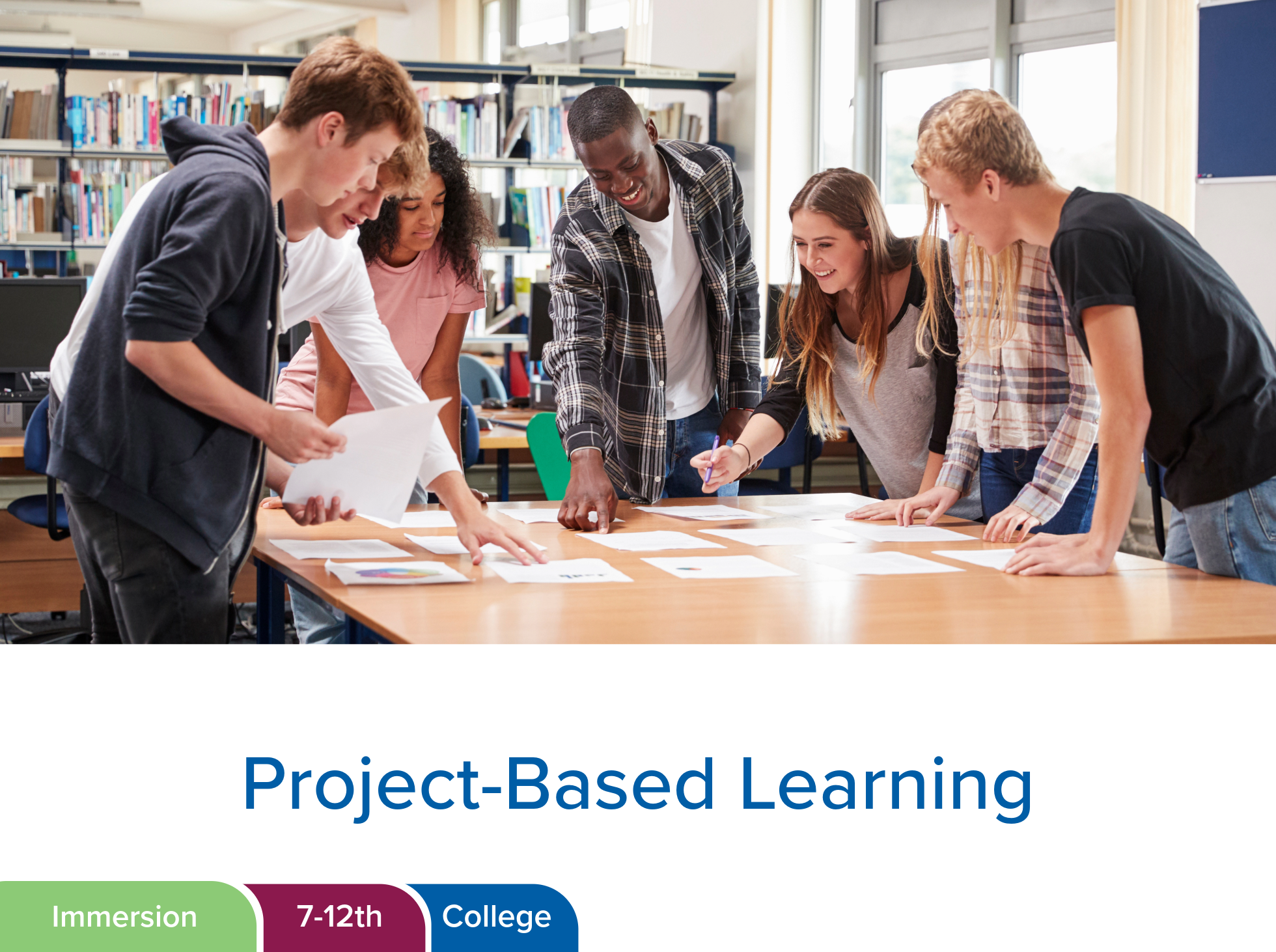
Students gain knowledge and skills by working over time to investigate and respond to a real-world problem, question, or challenge.

Time Required
Minimum Time: 2 Hours
Maximum Time: 16 Weeks (College Semester)
Project Examples
Community Design
Financial or Business Simulation
Marketing Plan and Logo Design
Prototyping and Engineering
Historical Research
Learning Expectations
Real-world connection (authentic problem)
Student ownership (inquiry, research, decision-making)
Team-based collaboration
Application of learning standards
Final product or presentation
Audience
Middle school, high school, and college-level students can complete a meaningful project-based learning experience. Projects must be created and tailored to learners, and the employer should choose the type of work/product desired to then select the appropriate age level with which to work.
Who’s Responsible for What?
Employers don’t manage the project; they only have to make it real.
Teachers handle:
Curriculum, structure, and student management
Employers provide:
Relevance, feedback, and real-world expectations
The Value
Allows employers to bring real-world relevance into the classroom. Students connect what they’re learning to actual careers while giving employers early influence on how future talent thinks, solves problems, and approaches work.
-
PBL Gold Standard
Learn the seven (7) essential elements to a gold-standard project-based learning experience.
-
Describing the Experience
Watch this video to learn more about project-based learning experiences through the lens of educators.
-
PBL Guide
Learn about the importance of PBL in student learning and mastery. Access links to PBL ideas and projects.