The more you understand yourself, the easier it is to spot the path that fits.
No Two Paths Are the Same
No two paths are the same, because no two people are the same. Your brain learns in its own way. Your strengths show up differently than others. What matters most to you may not matter to someone else. That’s a good thing. Don‘t follow someone else’s map. Build a path that actually fits you.
Embrace the Winding Path
Everyone grows and changes, and that’s a good thing. Your interests shift as you try new things, learn about yourself, and move through different stages of life. Your path may seem confusing, but those moments help you understand who you are becoming. Lean into it — the winding path is where real discovery happens.
First, learn the lingo.
As you explore who you are, you’ll see new words. Learning these words first makes the next steps of career exploration easier.
-
![Gear]()
Abilities
Things you are able to do, either naturally or through practice.
-
![Analyze]()
Assessments
Tools and quizzes that help you learn more about yourself.
-
![Puzzle with Light Bulb]()
Aptitude
What you are naturally good at or learn quickly.
-
![Star]()
Interests
Things you enjoy learning about and/or spend your time doing.
-
![Brain]()
Knowledge
The information you know and understand.
-
![Half light bulb half brain]()
Learning Style
The way you learn best, like by seeing, hearing, or doing.
-
![Heart]()
Passions
Activities or topics you care about deeply and love doing.
-
![Tool box with tools]()
Skills
Things you can do because you practiced and learned them.
-
![Muscular arm]()
Strengths
Things you do well and feel confident about.
-
![Scale]()
Values
The beliefs and ideas that guide what matters most to you.





Let’s find out who you are, together.

APTITUDE
These assessments help you understand the natural abilities your brain already leans toward (i.e., how your “brain is wired to think”). They don’t measure what you’ve learned in school but instead reveal how you think, process, and approach challenges.
Aptitude assessments are often “brain games” and other puzzle-like activities.
Look at small clues or examples and figure out the bigger idea they all point to;
Understand numbers, basic math relationships, and data patterns;
Understand words, written information, directions, and language patterns;
Place steps in the right sequence;
Visualize shapes, objects, and movement;
Respond to signals, cues, or changes; and
Hold and work with information in your mind
Try It For Yourself!
-
Used by all schools in Hancock County, as well as numerous schools and programs across and Ohio and the nation. Learn more.
Offered by: Individual school districts
-
Also known as CAPS, this assessment consists of eight, five-minute tests designed to measure abilities that are related to performing a job.
Offered at: Millstream Career Center
-
A multiple-aptitude battery that measures developed abilities and helps predict future academic and occupational success in the military. It is administered annually to more than one million military applicants, high school, and post-secondary students.
Offered by: local school district guidance counselors and military recruiting locations
INTERESTS
Interest assessments help you understand the kinds of activities, environments, and subjects that naturally draw your attention. Instead of measuring what you’re good at, they look at what feels energizing, meaningful, and fun.
Interest assessments are often simple reaction formats such as “like/dislike,” “prefer/do not prefer,” and “often/never.”
Preferences toward careers that are:
Realistic (hands-on), Investigative (research, analysis), Artistic (creative expression), Social (helping, teaching), Enterprising (leading, persuading), Conventional (organizing, structuring)
Work environments that feel appealing:
outdoors, office-based, technical labs, collaborative spaces, etc.
Preferences toward working with people/things/data/ideas
Take It Right Now.
-
Used by all schools in Hancock County, as well as numerous schools and programs across and Ohio and the nation. Learn more.
Offered by: Individual school districts
Requirement: Purchasing one-time subscription.
-
The OhioMeansJobs Career Navigator website allows individuals to take a free survey that unlocks tailored resources to help people become their best self.
Requirements: Creating an OHID account.
-
Hosted by the US Department of Labor, this 30-question online survey links interest results directly to 900 occupations in O*NET OnLine.
Requirements: Computer and internet access. Free survey.
-
Produced by the Myers-Briggs Company, this survey identifies an individual’s interests and links them to real-world occupations.
Requirements: Paid-per-person subscription and internet access.
PERSONALITY
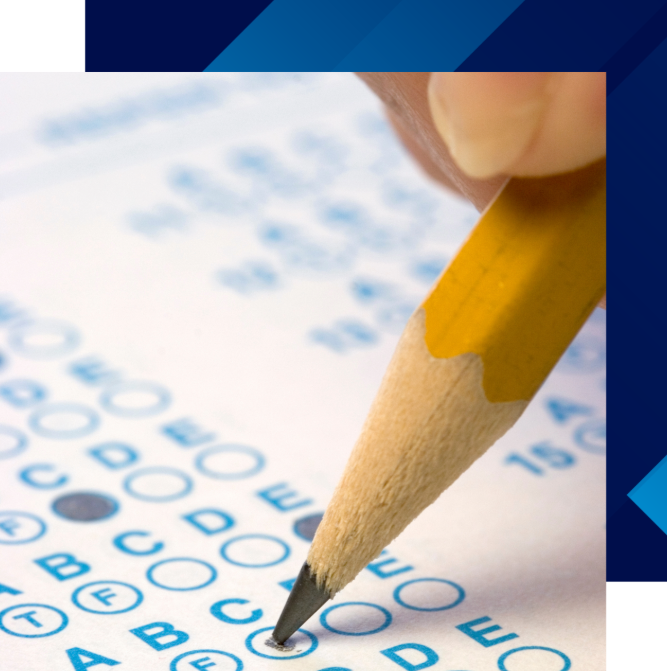
Personality assessments show how you naturally prefer to think, communicate, and work with others. They highlight your style—whether you like structure or flexibility, teamwork or independence, planning or improvising.
Personality only describes how you tend to act, not what you’re naturally good at or what you enjoy doing.
Extroversion / Introversion – Where you gain energy and how you prefer to engage with people.
Openness – Your curiosity, creativity, and comfort with new ideas or experiences.
Conscientiousness – How organized, dependable, and task-focused you tend to be.
Agreeableness – How cooperative, empathetic, and relational you are with others.
Emotional Stability – How calmly or intensely you respond to stress, change, and challenges.
-
A widely used, 100-question assessment that categorizes personalities into 16 distinct types. Results help people understand themselves to improve relationships and personal well-being.
Requirements: Paid subscriptions and internet access.
-
Assessment helping people undertstand their personality in relation to Openness, Conscientiousness, Extraversion, Agreeableness, and Neuroticism (OCEAN). These five traits reflect how people think, feel, and behave.
Requirements: Free survey. Internet access.
-
16 Personalities is a 10-minute survey that helps people describe who they are and why they do things the way they do.
Requirements: Internet access. Free survey.
-
DiSC® measures dimensions of your personality. It does not measure intelligence, aptitude, mental health, or values. DiSC profiles describe human behavior in various situations—for example, how you respond to challenges, how you influence others, your preferred pace, and how you respond to rules and procedures. It measures tendencies and preferences, or patterns of behavior, with no judgment regarding value or alignment with a skill set or job classification.
Requirements: Internet access or certified provider. Paid subscription.
-
Enneagram is an emotionally focused system of understanding people, identifying core emotional motivations and fears. Each of the nine personality types has its own driving force, which is centered around a particular emotion.
Requirements: Internet access. Free survey.
Discover How You Tend to Act.
WORKING STYLE
Everyone has a different way of working. Some people enjoy working with others, while others prefer to work independently. Some like predictable routines, while others enjoy variety and change. Working style assessments help you discover the environments and responsibilities where you'll be most successful and satisfied. Understanding how you work best can help you choose careers, employers, and workplaces that are a better fit for you.
When exploring careers, it's easy to focus on what you want to do without thinking about how you want to work every day. Finding a career that matches both your interests and your preferred working style can lead to greater success.
How You Approach Work—your pace, structure needs, and preferred workflow.
How You Solve Problems—your instinct to analyze, create, troubleshoot, or drive solutions forward.
How You Interact With Others—your tendencies to communicate, collaborate, influence, and contribute in team settings.
Your Natural Strengths—the tasks and contributions that consistently energize you.
Your Needs & Work Environment Preferences—the conditions (e.g., autonomy, clarity, support, pace, or structure) you require to do your best work.
-
Working Genius identifies the six fundamental activities that are required for any type of work and provides a simple framework for how work gets done. Working Genius is part personality assessment and part productivity tool.
Requirements: Paid subscription. Internet access.
-
The Predictive Index Behavioral Assessment provides validated, job-relevant insights into how someone is likely to behave at work and fit a role.
Requirements: Internet access. Free survey after creating profile.
-
Helps students see how their unique talents can bring clarity to their life as a student and help them thrive academically, socially and in their future career.
Requirements: Paid subscription. Internet access.
-
DiSC® measures dimensions of your personality. It does not measure intelligence, aptitude, mental health, or values. DiSC profiles describe human behavior in various situations—for example, how you respond to challenges, how you influence others, your preferred pace, and how you respond to rules and procedures. It measures tendencies and preferences, or patterns of behavior, with no judgment regarding value or alignment with a skill set or job classification.
Requirements: Internet access or certified provider. Paid subscription.
What’s Your Working Style?
LEARNING STYLE
This assessment helps you understand the formats that make learning feel easier and more comfortable. It will identify if you learn best through hands-on practice, visuals, reading/writing, listening, discussion, logical steps, or real-world examples.
Learn best through seeing, hearing, reading/writing, or doing;
Prefer to reflect first, jump in and try, analyze, or experiment;
Like step-by-step structure or big-picture concepts before details;
Work best independently, with a partner, in groups, or with teacher guidance;
Prefer hands-on examples, theory first, real-world applications, or visual maps/diagrams; and
Prefer quiet vs. background noise, movement vs. sitting still, or routine vs. variety.
How Do You Learn Best?
-
VARK (visual, audio, read/write, kinesthetic) is a learning styles questionnaire that helps people learn better by suggesting the study strategies that are best for them.
Requirements: Paper and pencil. Free survey.
-
Kolb provides learners with a self-reflective tool to help them understand how they learn from experience and their unique individual approach to learning.
Requirements: Internet access. Paid subscription.
VALUES
A values assessment shows whether you care most about helping others, stability, creativity, growth, teamwork, independence, recognition, balance, or financial security. It uncovers the priorities and conditions that make you feel motivated, respected, and fulfilled.
Your motivation for helping others, achievement, creativity, challenge, learning, or security;
What you need from your work environment (e.g., pace or variety);
How you contribute in the workplace (e.g., teamwork, leadership, independence, precision, or innovation);
Your expectations of employment (e.g., community impact, professional growth, or financial rewards); and
What makes work meaningful (e.g., recognition, balance, purpose, autonomy, or advancement).
Take One Today.
-
COPES is a 20-minute survey for aligning people’s personal values to careers.
Requirements: Intenet access. Paid subscription. Offered to area high school students for free through Millstream Career Center.
-
The Life Values Inventory is an assessment tool developed to help individuals clarify their values and guide decision making.
Requirements: Internet access. Free survey.
-
Identifies the five types of wealth (Time Wealth, Social Wealth, Mental Wealth, Physical Wealth, and Financial Wealth) that may influence a person’s decisions and values.
Requirements: Internet access. Profile creation.
What Comes Next.